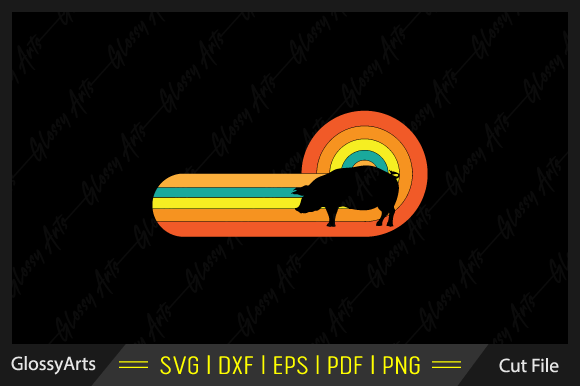
Pig Retro Style Svg Printable Cut File
When I sit down to evaluate a new digital asset for my embroidery studio, I am rarely looking for just another cute image. I am looking for viability. Does this design hold up under the tension of a hoop? Will it translate cleanly from screen to fabric? Can it serve as the centerpiece of a commercial product without looking cheap or overly complex? Today, I am putting Pig Retro Style Svg Printable Cut File through that exact rigorous filter. This is not just about how it looks in a preview window; it is about how it behaves when you are trying to create a sellable, high-quality handmade item.
First Impressions: Mood and Visual Personality
The moment you open the file, the aesthetic is immediately clear. The "retro" designation isn't just a buzzword here; it suggests a specific era of graphic design—likely drawing from mid-century modernism or 70s pop art influences. For an embroidery designer, this visual language is crucial because retro styles often rely on bold shapes and limited color palettes, which translates exceptionally well to thread work.
The subject matter—a pig rendered in this stylized manner—brings a sense of whimsy and nostalgia. It feels approachable yet curated. In the world of craft business, where saturation is high, having a character that evokes a specific feeling is half the battle won. This design doesn't scream for attention with chaotic details; instead, it offers a confident silhouette. This confidence is what makes it suitable for everything from a minimalist nursery accent to a statement piece on a heavyweight sweatshirt.
Real-World Application: Where This Design Shines
To truly understand the value of Pig Retro Style Svg Printable Cut File, we have to look at practical scenarios. Let’s imagine you are preparing inventory for an upcoming craft fair or updating your Etsy shop for the holiday season. You need items that feel personal but can be produced efficiently.
This design excels on structured fabrics. A canvas tote bag is a classic choice, and the clean lines of a retro style tend to stand out against the natural texture of cotton duck. However, the real potential lies in apparel. Imagine this design centered on the chest of a vintage-wash hoodie or embroidered on the back of a denim jacket. The contrast between the rugged fabric and the polished, graphic nature of the pig creates a sophisticated juxtaposition that customers love.
It also fits naturally into the baby and nursery market. A soft pastel version of this retro pig on a muslin swaddle or a burp cloth taps into the "modern farmhouse" or "mid-century kid" trends that are currently dominating home decor. Because the design is likely vector-based (given the SVG format), scaling it up or down allows for flexibility across different product sizes, from a tiny pocket square to a large throw pillow cover.
Commercial Viability and Branding
For the Etsy seller or small shop owner, consistency is key. This design has a strong brand identity. If you use it repeatedly across your marketing materials, social media posts, and product tags, it becomes recognizable. The retro theme allows for easy coordination with other assets. You can pair it with complementary fonts or similar styled animals to build a cohesive collection. This kind of strategic thinking turns a single embroidery project into a line of commercial embroidery goods.
Technical Considerations and Stitch Behavior
As a reviewer, I must address the technical translation. While the source is an SVG, the end result is thread. The success of this machine embroidery design depends heavily on how the digitizer interprets the curves and angles of the retro style.
Satin Stitches and Edges: Retro designs often feature crisp edges. If the digitization uses dense satin stitches along the perimeter of the pig, it will give a professional, finished look. However, if the curve is too tight, the stitch may pucker. I recommend checking the edge treatment closely. A slightly reduced density on curved sections can help maintain the shape without distorting the fabric.
Fill Stills and Texture: Depending on the level of detail, the body of the pig might be filled with a patterned fill stitch. In a retro style, simpler fills often work better than intricate textures. A solid block of color or a simple diagonal fill can mimic the flatness of the original graphic art more effectively than a complex mesh, ensuring the design remains legible from a distance.
Running Stitch Accents: If there are small details like eyes, snout wrinkles, or decorative elements, running stitches can add a nice touch of realism without adding bulk. This is particularly useful for keeping the final finished product soft to the touch, which is essential for baby items or frequently used kitchen towels.
Where to Use Caution
No design is universal, and Pig Retro Style Svg Printable Cut File has its limitations. It is not ideal for every surface or fabric type.
- Small Hoop Sizes: If the design includes intricate corner details, test it in a smaller hoop first. Tiny details can get lost or become distorted if the fabric stretches too much during stitching.
- Stretchy Fabrics: While jersey knits are popular for t-shirts, they require careful stabilizer usage. A heavy retro design might warp a thin, stretchy tee if not backed properly. Always use a tear-away or cut-away stabilizer depending on the garment's weight.
- Textured Fabrics: Avoid using this on boucle, heavy tweeds, or highly textured linens. The clean lines of the retro pig will get swallowed by the fabric grain. Stick to smooth surfaces like cotton, linen blends, or smooth synthetics for the best clarity.
- Curved Surfaces: Embroidering directly onto a baseball cap or a rounded mug sleeve requires advanced techniques. The flat, graphic nature of the design might look distorted if not carefully adjusted for curvature. It is safer to embroider these designs on flat panels before attaching them to curved items.
Practical Designer Notes for Execution
Before you rush to produce a batch of personalized gifts, follow these steps to ensure quality:
- Test on Scrap Fabric: Never assume a design will behave perfectly. Stitch it out on the actual fabric you plan to use. Check for puckering, thread breaks, and color accuracy.
- Check Thread Contrast: Retro styles often rely on bold colors. Ensure your thread choices provide enough contrast against the fabric. On dark fabrics, light threads can sometimes look washed out unless you use a high-density underlay.
- Review Stitch Density: Look at the digitized file if possible. Is the density appropriate for the fabric weight? Too dense, and the fabric will stiffen; too sparse, and the backing will show through.
- Black and White Mockups: Convert the design to grayscale to check its balance. Sometimes colors hide compositional flaws. If the design looks unbalanced in black and white, it will likely look off in color too.
- Confirm Licensing: Since this is a digital download, verify the license terms. Are you allowed to sell the physical items you create? Most retail licenses permit this, but it is critical to confirm before listing on platforms like Etsy or Amazon Handmade.
Final Verdict
Pig Retro Style Svg Printable Cut File is a versatile, charming addition to any designer’s library. Its strength lies in its clear, nostalgic aesthetic that translates well to various mediums, from tote bag design applications to sweatshirt embroidery. It appeals to a broad audience, from parents looking for unique nursery decor to fashion-forward individuals seeking quirky accessories.
By paying attention to fabric choice, stabilizer support, and thread selection, you can elevate this design from a simple graphic to a premium handmade product. It is a smart choice for craft business owners looking to add a touch of personality and professionalism to their inventory. Just remember to test thoroughly, respect the material, and let the design’s inherent charm do the talking.